
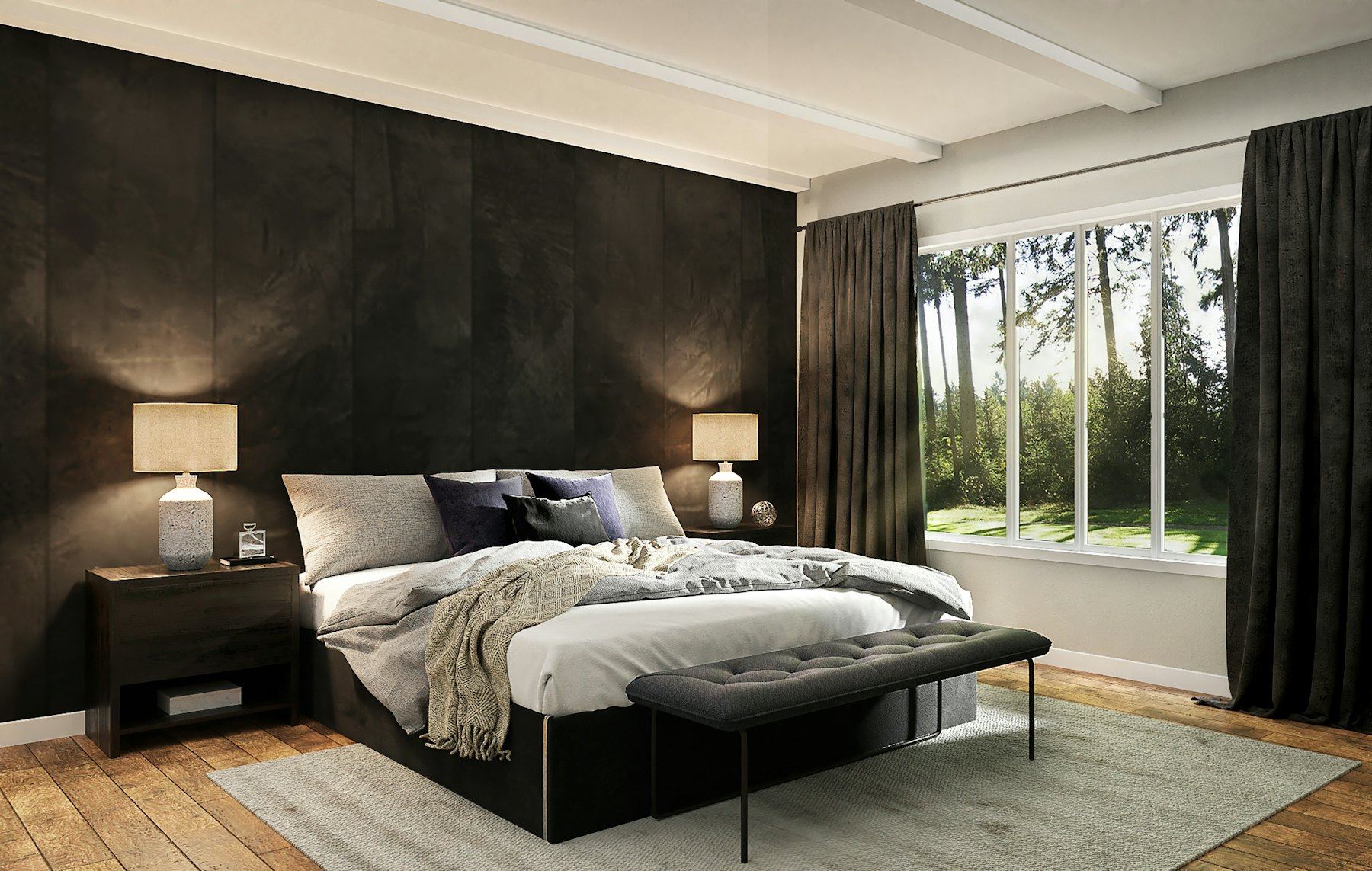
The bedroom is the room we spend the most hours in and the least time thinking about. It's often where the spare chair, the laundry pile and the boxes from the last move end up. Yet as the nights lengthen, it's the room that can make the biggest difference to how we feel: a calm, warm, softly lit bedroom makes the dark mornings bearable and the early nights something to look forward to.
Mid-September is the right moment to make the change. The summer duvet is starting to feel thin, the light has a golden slant to it, and there's still time to get organised before the clocks go back. Here's how I'd go about it.
Begin with the bed
A sanctuary starts with what you lie in. The secret to a bed that feels both inviting and adaptable is layering, rather than relying on one thick duvet to do everything.
- Good sheets. Cotton percale is crisp and cool; washed linen is soft, breathable and gets better with age. Both are worth having in the cupboard.
- A duvet suited to the season. A mid-weight duvet will see most British bedrooms through autumn. In deep winter you can add a lighter one on top, or use an all-seasons set that clips together.
- A blanket or quilt. A wool blanket folded at the foot of the bed is the most useful extra layer you can own: pull it up on cold nights and kick it off when the heating comes on.
- A throw and cushions. These are mostly for looks, but a throw across the end of the bed is lovely to curl up under when you're reading.
Stick to natural fibres where you can. They breathe, which means you're less likely to wake up too hot at three in the morning and too cold at six.
Colour that wraps around you
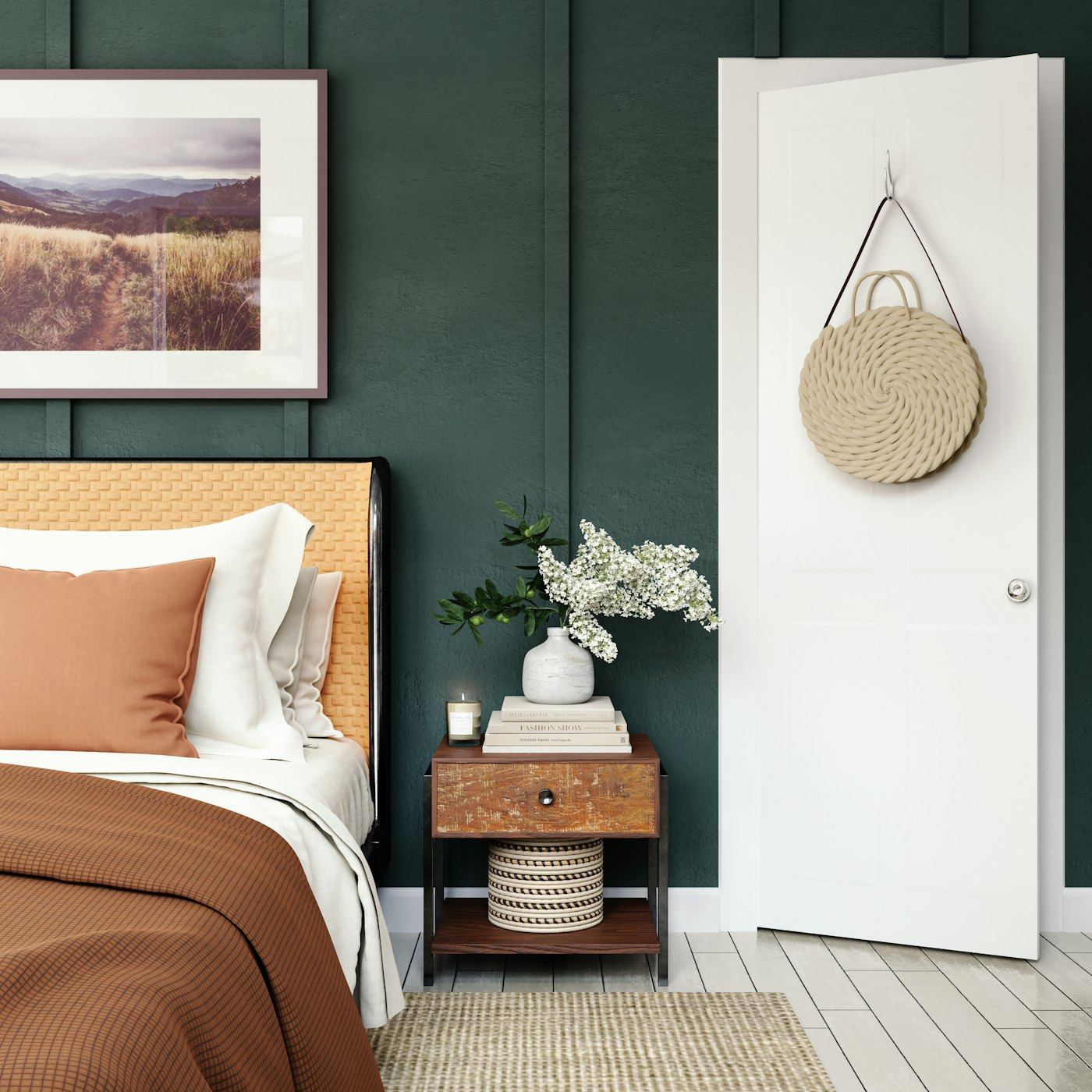
Bedrooms are the one place where dark walls almost always work. Charcoal, deep green, inky blue or a warm plum can make a room feel enveloping rather than gloomy, especially if it has a decent window. Small rooms often benefit most, because the corners seem to recede and the whole room becomes a cocoon.
If dark walls feel too big a step, try a deep colour behind the bed only, or paint the woodwork and ceiling in a softer shade of the wall colour. Then bring in warmth through the bedding: rust, terracotta, ochre and dusky pink all look gorgeous against green and charcoal. Our guide to British paint palettes has more on choosing shades for north- and south-facing rooms.
Heavy curtains, properly hung
Nothing changes the feel of a bedroom quite like good curtains. They block early light, muffle the street and keep a surprising amount of warmth in, especially in older houses with single-glazed windows.
What to look for
- Lining – a thermal or blackout lining, or both, gives curtains weight and helps them hang beautifully.
- Length – floor-length curtains look more generous and stop draughts better than sill-length ones, unless there's a radiator under the window.
- Width – fit the pole well beyond the window frame so the curtains can be pulled right back during the day, letting in every scrap of light.
- Height – hanging the pole closer to the ceiling than to the top of the window makes the room feel taller.
If your radiator sits under the window, floor-length curtains will trap its heat behind them. In that case, consider a lined blind fitted inside the window recess, with curtains either side that you leave open at night, or simply curtains cut to sill length. For persistent draughts, see our practical guide to draught-proofing without renovation.
A calm, softly lit bedroom makes the dark mornings bearable and the early nights something to look forward to.
Soft light, from low down
Overhead lights have no place in a bedroom after dark. They're fine for finding a lost sock, but for everything else you want low, warm light at the level of the bed.
- A lamp on each side of the bed, with shades that diffuse rather than glare.
- Warm white bulbs, and dimmable ones if you can.
- A wall-mounted reading light or an adjustable lamp if one of you reads late.
- A small lamp on a chest of drawers or dressing table to light the far side of the room.
- Candles only while you're awake and in the room – never drift off with one burning.
Try to keep screens out of the bedroom, or at least put the phone on charge across the room. It's one of those bits of advice everyone gives and few of us follow, but it really does help.

Calm, and a little less stuff
A sanctuary is as much about what you take out as what you put in. Clear the floor, find somewhere else for the laundry, and give the bedside tables a ruthless edit. A lamp, a book, a glass of water and perhaps a small jug of flowers is plenty.
Have nothing in your houses that you do not know to be useful, or believe to be beautiful.
William Morris
Good storage helps: a blanket box at the foot of the bed, baskets underneath it, or a chest of drawers instead of an open clothes rail. If you'd like to find these pieces second-hand, our guide to charity shops, car boots and antiques is a good starting point.
The finishing touches
Finally, think about the other senses. A sprig of lavender by the pillow or a linen spray adds a quiet scent. A rug beside the bed means your feet meet something soft first thing, rather than cold boards. And a chair, if you have the space, gives you somewhere to sit and pull on your socks, or simply to read with a cup of tea before the day begins.
None of this needs to happen at once. Start with the bed and the lamps, add curtains as the evenings darken, and by the time November arrives you'll have a room that feels like a retreat. Then, when you're ready to tackle the rest of the house, our November guide to a warm and cosy home is waiting.



Comments
No comments yet — be the first to share your thoughts.