
If you grew up in Britain, there is a good chance you have spent time in a 1930s semi. They line the arterial roads out of every town, with their bay windows, their pebble-dash or render, their mock-Tudor gables and their front doors glazed with a little stained-glass sunrise. Because they are so familiar, they are easy to overlook. That is a mistake, because the interwar semi was designed for a new kind of household, and its best features still suit the way we live now.
A house built for light and modern living
Interwar builders were selling a dream of fresh air and suburban space to families leaving cramped terraces. The rooms are squarer than in a Victorian house, the ceilings a little lower, and the windows larger. The bay, often running up two storeys, was a selling point: it brought light deep into the front room and the main bedroom above it. Inside you might find a picture rail, a simple coved cornice, a tiled fireplace in creams and browns, panelled doors with distinctive horizontal or stepped panels, and woodblock parquet in the hall or front room.
Many of these features have been stripped out over the decades, but plenty survive, and those that do are worth celebrating rather than hiding.
Make the bay the heart of the room
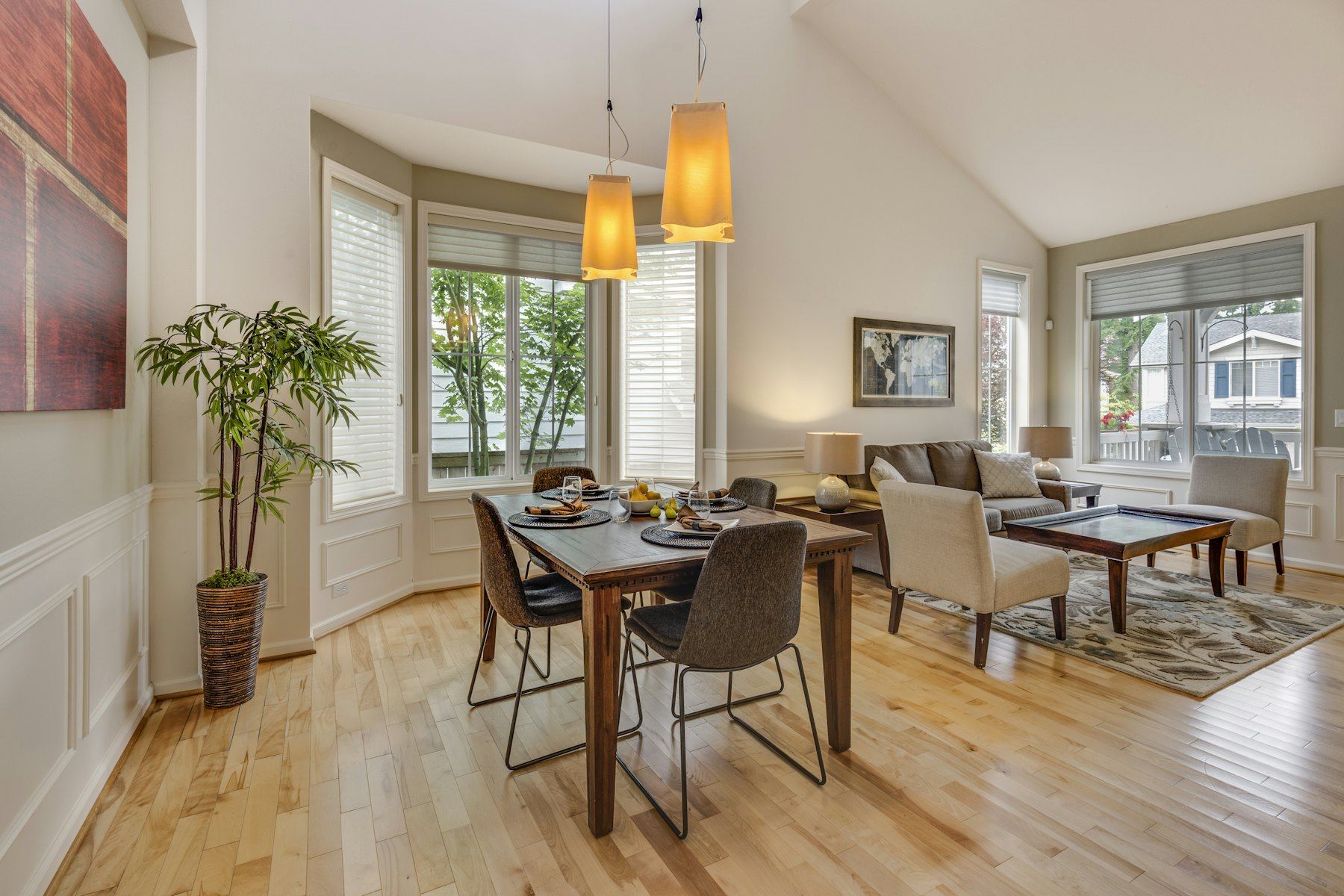
The single most common mistake in a 1930s semi is putting the sofa with its back to the bay, facing a television on the chimney breast. It is understandable, but it wastes the best-lit spot in the house. Consider a dining table in the bay instead, as in the room at the top of this page: breakfast in the morning sun, homework in the afternoon, supper with the street lamps coming on outside.
The bay window is the best seat in the house, so give it to the people, not the television.
If the bay is too small for a table, a built-in window seat with storage underneath is the classic answer. Pile it with cushions and it becomes a reading spot, a place for plants and somewhere to watch for the post. A pair of low pendants hung over the table or seat helps define the zone and keeps the bay cosy once it gets dark.
For dressing the windows, avoid anything that blocks the light during the day. Slim blinds fitted within each window, café shutters on the lower half, or curtains that stack back neatly beyond the bay all work well. If you have the original metal-framed windows, often Crittall or similar, with their slim horizontal glazing bars, keep the treatment minimal so those crisp lines can be seen.
Art Deco details worth hunting for
The average semi was not a showpiece of Art Deco, but the style crept in everywhere, in the geometry of the glass, the stepped shape of a fireplace, the curve of a hall radiator. Look out for:
- Sunrise and sunray glass in front doors, side panels and the small windows on the landing.
- Tiled fireplaces with stepped tops and mottled glazes in cream, oatmeal, green or brown. They are slightly out of fashion, which is precisely why they are worth keeping.
- Parquet flooring, often hidden under carpet. Loose blocks can be relaid and missing ones replaced with reclaimed blocks.
- Original doors with horizontal panels, plus their Bakelite or chrome handles.
- Curved details on bay windows, porches and staircases.
If your house has lost these features, a few careful additions can bring the period back: a mirror with a stepped or fan-shaped frame, a pair of glass shell wall lights, a reclaimed fireplace from a salvage yard. Our guide to charity shops, car boots and antiques is a good place to start hunting.
Bringing Deco glamour upstairs
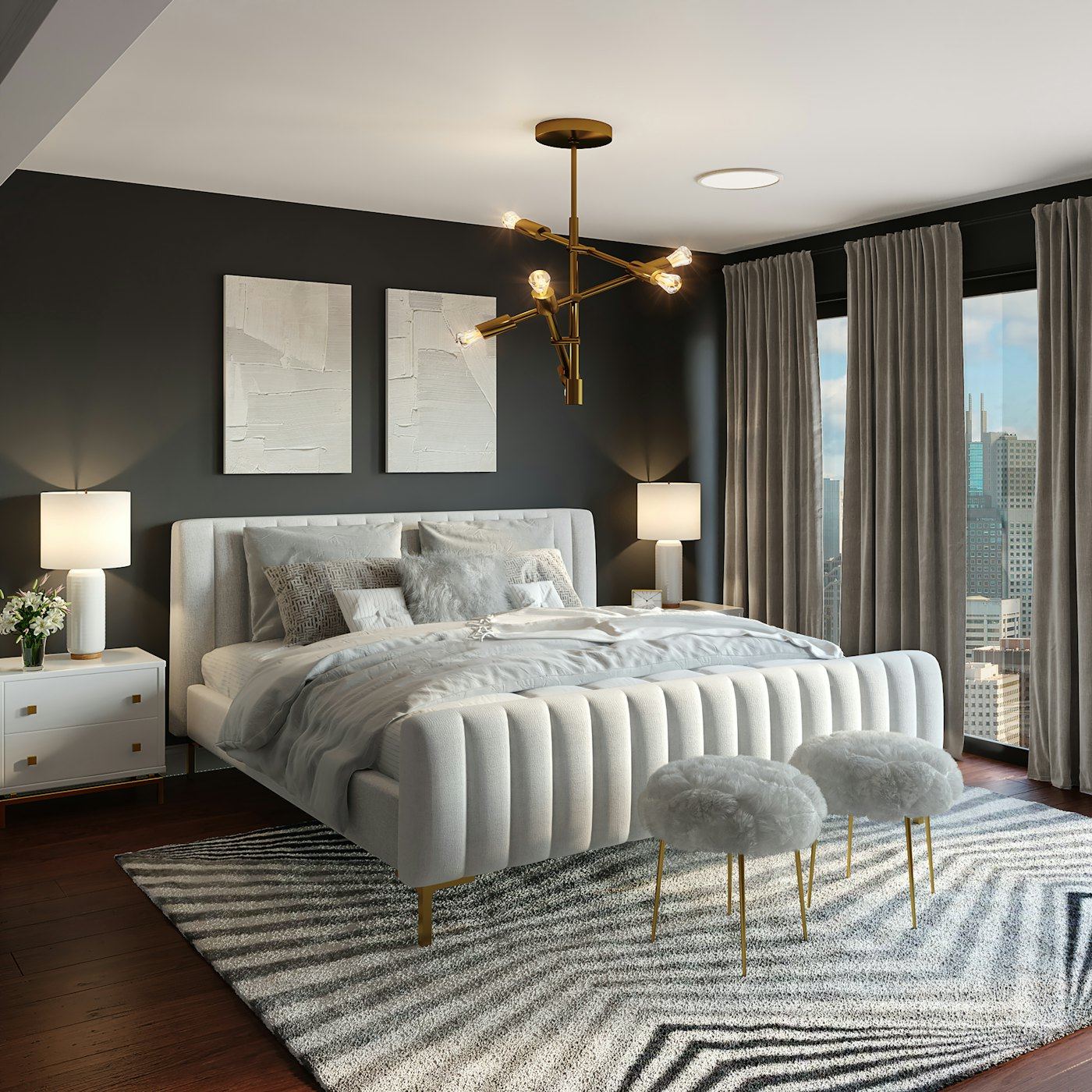
Bedrooms in a 1930s semi are often a sensible size, with the main one benefiting from the upper bay. It is the perfect place to have a little fun with the glamour of the period. Deco loved strong contrasts, polished metals and rounded, upholstered shapes, all of which translate easily to a modern bedroom.
A dark wall behind the bed, in charcoal, inky blue or deep green, sets the scene. Add a channel-tufted headboard, which echoes the stepped, linear rhythm of the era, and a light fitting in brass. Bedside lamps with glass or pleated shades, a velvet stool or two, and a round mirror complete the look. Keep everything else simple; the point is a sense of occasion, not a film set.
If you are after warmth as well as glamour, our piece on layering a bedroom sanctuary covers the textiles that make a room feel properly snug.
Where to modernise freely
Most 1930s kitchens were small, separate rooms at the back, and many semis have already had them knocked through or extended. This is the natural place to be contemporary. A big kitchen-diner opening onto the garden is entirely in the spirit of a house that was sold on fresh air and sunshine.
The same goes for the bathroom, though if you are lucky enough to have original tiling, consider working around it. Black and white, or mint green and cream, can look fresh again with modern fittings and good lighting.
Above all, resist the urge to make a 1930s semi into something it is not. It is not a cottage or a Georgian townhouse. Its charm lies in its sunny practicality, its good proportions and its small flourishes of Deco optimism. Furnish it with that in mind and it will reward you with one of the most liveable homes in Britain.
We moved our dining table into the bay after reading something similar years ago and never looked back. The only downside is that the neighbours now know exactly what we have for tea.
The price of good light, we are afraid! A few café shutters or half-height voiles on the lower panes can buy a little privacy without losing the sun.
Our semi still has the original tiled fireplace in a sort of mottled beige. I have been planning to replace it for years but this has made me hesitate. Might try painting the wall around it a darker colour first and see how it looks.