
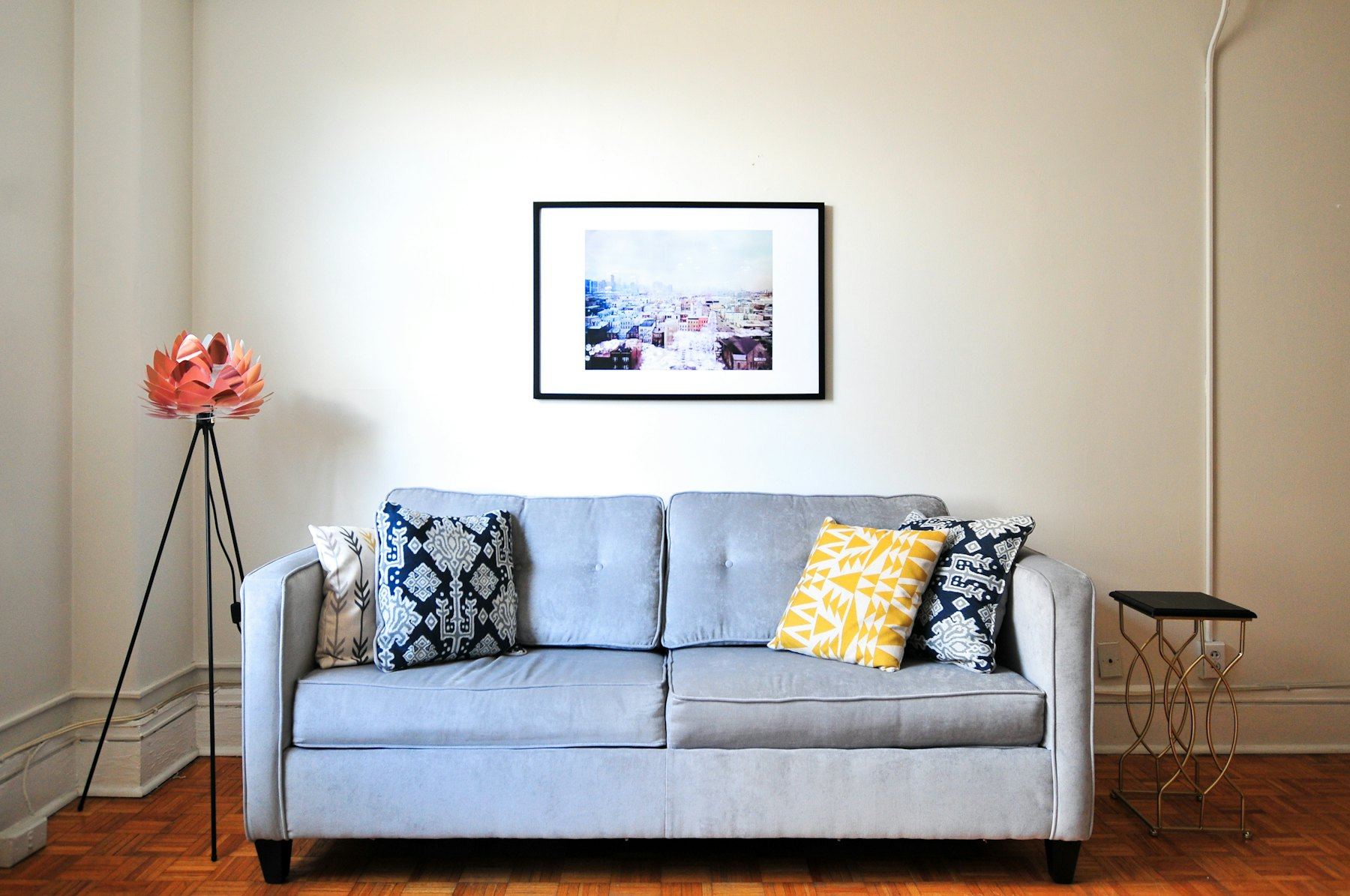
I have rented eleven homes in my adult life, from a damp basement in Bristol to a top-floor flat in a Victorian conversion where the radiator knocked like a polite ghost. Every one of them came with magnolia walls, at least one inexplicable carpet, and a landlord who was perfectly nice right up until you mentioned Rawlplugs. Over the years I have learned that you can make almost any rental feel like home without picking a fight over your deposit. The trick is to decorate the room, not the building.
Start with the boring bit: the paperwork
Before you buy a single cushion, reread your tenancy agreement. Some forbid picture hooks entirely, some allow "a reasonable number", and plenty say nothing at all, which is not the same as saying yes. If you want to do anything that touches the fabric of the place, whether that is hanging a shelf, painting a wall or swapping a light fitting, ask your landlord or letting agent in writing and keep the reply. An email saying "yes, fine, just fill the holes when you leave" is worth its weight in gold at check-out.
It also helps to know where your money is. In England and Wales, a deposit on an assured shorthold tenancy should be protected in a government-approved tenancy deposit protection scheme, and those schemes offer a free dispute service if you and your landlord disagree at the end. Scotland and Northern Ireland have their own schemes. The official government websites explain the rules far better than I can, and they are worth ten minutes of your time.
Finally, take your own photographs on moving-in day, even if there is a professional inventory. Photograph every wall, every scuff, every stain on that carpet. Date them, back them up, and forget about them until you need them.
Walls you are not allowed to touch
Blank walls are the thing renters mind most, and the answer is to stop thinking of art as something that must hang.
- Lean, don't hang. A large framed print propped on a sideboard or a deep windowsill looks deliberate and relaxed. Layer a smaller frame in front for depth.
- Use a picture ledge on existing fixings. Many rentals already have screws or plugs from a previous tenant's shelf. With permission, reuse them rather than adding new holes.
- Be wary of adhesive hooks. They are sold as damage-free, and on gloss or tiles they often are. On matt emulsion over old plaster, they can take a patch of paint (and sometimes skim) with them when they come off. Test one somewhere discreet first, and remove them slowly, pulling the tab straight down along the wall.
- A big mirror on the floor bounces light round a dim north-facing room and asks nothing of the wall at all.
If you do have permission to hang things, our gallery wall guide shows how to plan the arrangement on the floor first, so you only make the holes you actually need.
Most of what makes a room feel like yours is portable. Your landlord owns the walls; you own everything in front of them.
Soft furnishings do the heavy lifting
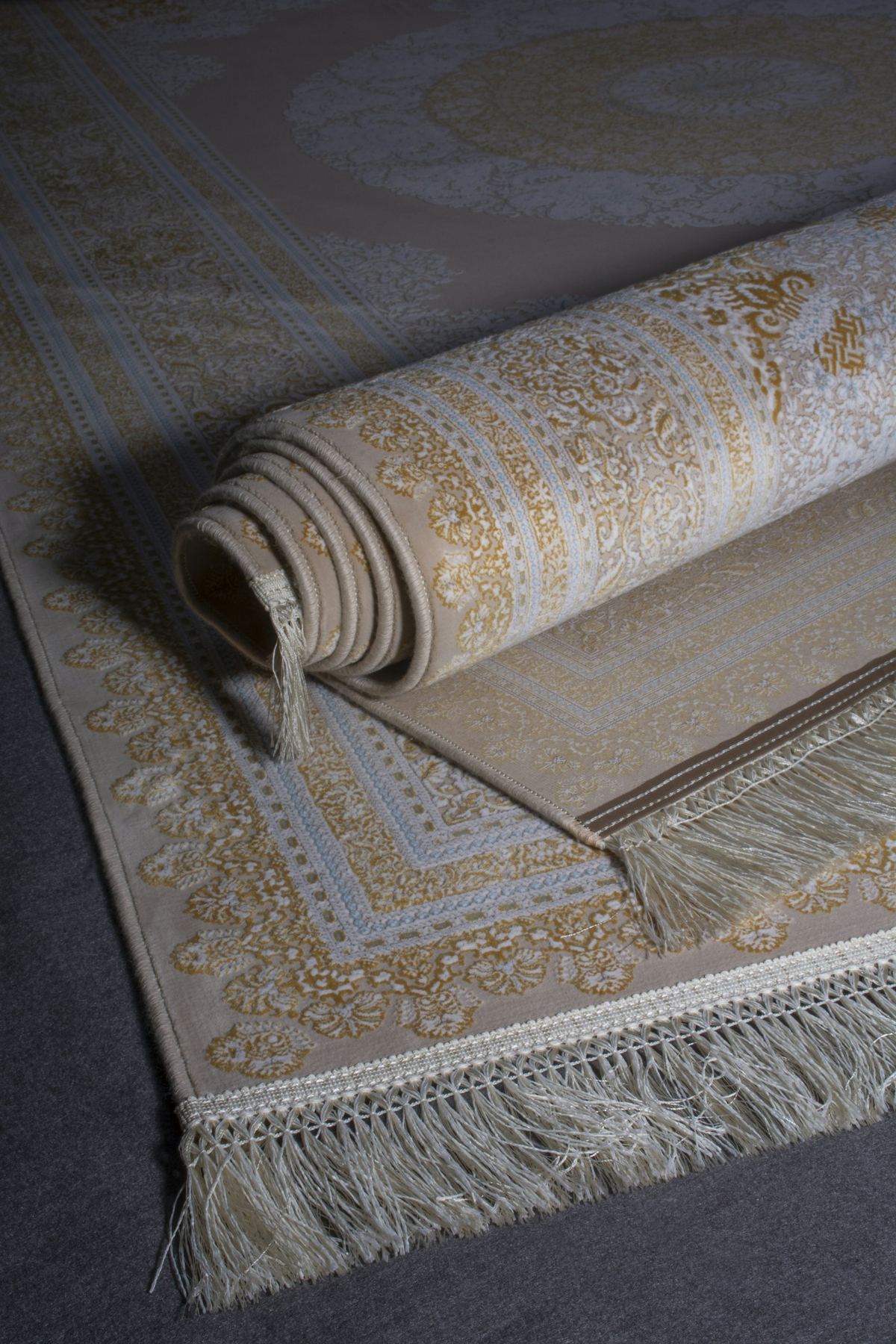
Textiles are a renter's best friend because they change a room completely and then leave with you in a removal van. A generous rug laid over a tired fitted carpet does wonders, and it protects that carpet from your sofa feet and your guests' red wine. Put a non-slip underlay beneath it so it does not creep.
Curtains are the next big win. Landlord curtains tend to be either thin and pale or heavy and floral in a way nobody chose. Take them down carefully, fold them into a labelled bag and put them in the top of a wardrobe. If the existing pole or track will take your own curtains, you have changed the whole character of the room in an afternoon. Tension rods are useful for alcoves, small windows and hiding the clutter under a sink.
Then cushions, throws and bedding. If the sofa came with the flat and is the colour of porridge, a well-fitted throw and three or four cushions in a confident palette will distract the eye beautifully. Charity shops are excellent hunting grounds for wool blankets and old linen; our guide to charity shops, car boots and antiques has more on what to look for.
Colour without a paintbrush
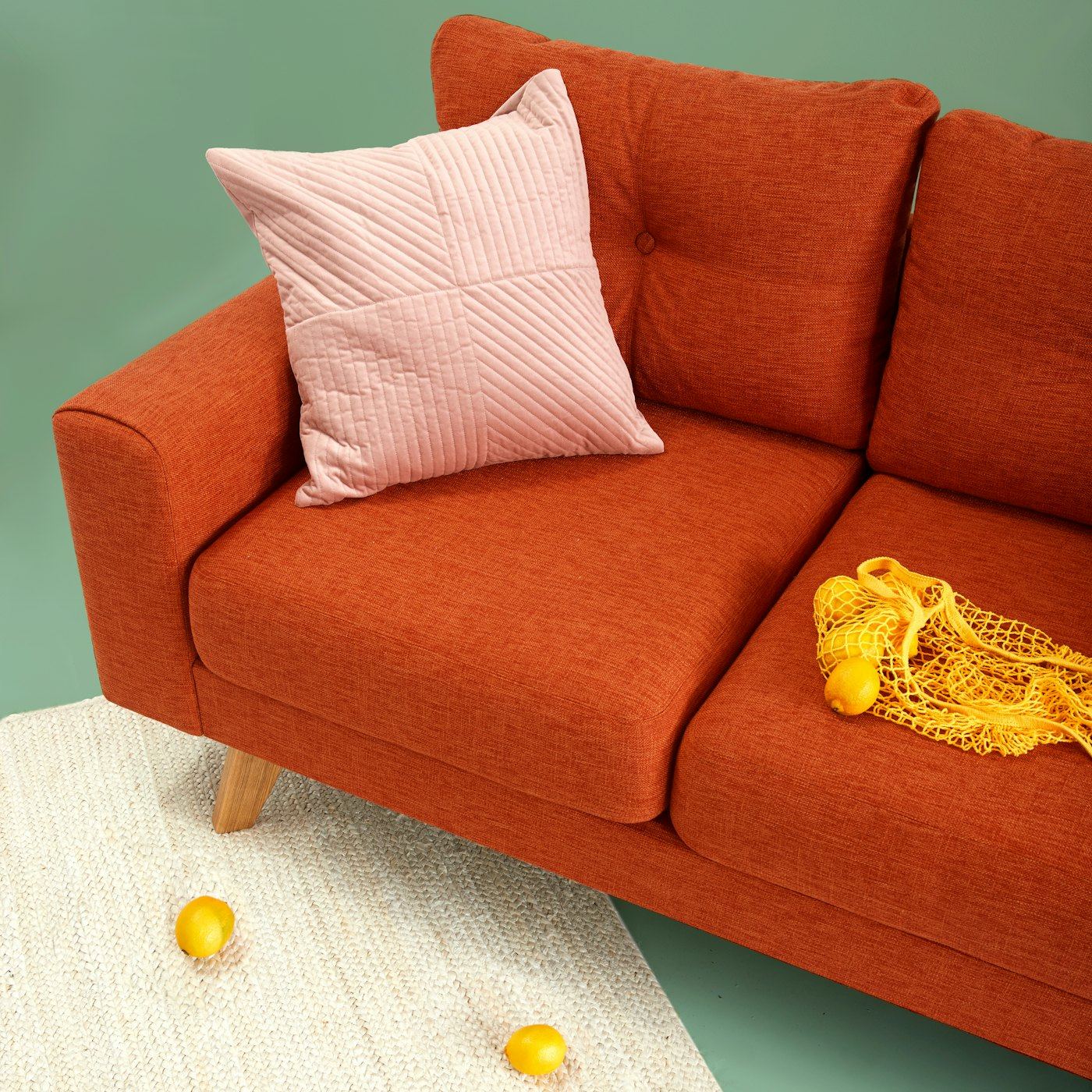
Some landlords are perfectly happy for tenants to paint, especially on longer tenancies, as long as the walls go back to a neutral colour (or stay a colour they like). It is always worth asking. If the answer is no, bring colour in through furniture and accessories instead. A single saturated piece, like an orange sofa or an ochre armchair, can carry a whole room, and pairing it with a contrasting cushion makes it look intentional rather than accidental.
Books are colour too, and so are plants, glass bottles on a windowsill and a striped runner on a hallway floor. If you are itching to try a palette before you have walls of your own, our piece on the British paint palette is a good place to collect ideas for the future.
Light changes everything
Rentals are often lit by a single central pendant with a paper shade, which is the interiors equivalent of a strip light in a doctor's waiting room. You can transform the evening atmosphere without touching the wiring:
- Add a floor lamp and at least one table lamp, so you can switch off the overhead light altogether.
- Choose warm-white bulbs for living spaces.
- Swap the pendant shade for one you like. It is usually a simple lampshade ring, but switch off at the wall and let the bulb cool first, and keep the original shade to put back.
- Plug-in wall lights with a neat cable cover give the look of fitted lighting with nothing permanent at all.
Leaving it as you found it
The last week of a tenancy is when deposits are won and lost. Give yourself time rather than doing it all the night before the keys go back.
- Put back every original fitting, shade, curtain and handle from the landlord box.
- Fill any holes you were permitted to make, and touch up with the right paint if you have it.
- Peel off any adhesive hooks slowly and wipe away residue.
- Lift your rugs and check the carpet underneath, then vacuum it properly.
- Clean the oven, the extractor filter and the inside of the fridge. They are always checked.
- Photograph everything again, matching your moving-in photos as closely as you can.
Renting is not a waiting room for real life. You are allowed to love the place you live in now, even if somebody else's name is on the deeds.

The landlord box is genius. I lost part of my last deposit because I could not find the original bathroom blind, which had been in a cupboard all along.
That exact story is how the landlord box was born in our house. Painful lesson, but you will never make it twice.
Agree about adhesive hooks on matt paint. One took a little square of plaster with it in my bedroom. I now use them only on the tiles and the inside of wardrobe doors.
Is it worth asking to paint if you are only on a twelve-month tenancy? It feels like a lot of effort to paint it back.
It depends how much the colour matters to you. Some landlords will let you keep a sensible neutral or a colour they like, so it is worth asking what they would accept before you assume you have to paint it all back.
Swapping the paper pendant shade was the single best thing I did in my flat. I spent hardly anything and the living room finally feels grown up.